
A European Distributor Changed Swab Manufacturers Mid-Contract. Here's What Happened Next.

The switch seemed like a straightforward cost-saving decision. It wasn't.
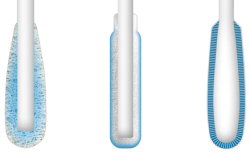
A regional medical distributor serving hospital networks across three Central European countries had sourced nasopharyngeal swabs from the same Chinese manufacturer for four years. The relationship was stable. Delivery times were reliable. Documentation was clean. Then a competing supplier offered the same product specification at 18% lower cost per unit, with equivalent certifications on paper.
The procurement team ran a basic certificate review, ordered a sample batch, and made the switch. Twelve weeks later, they were managing a complaint escalation from two hospital systems and an inquiry from a national health authority.
What the Certificates Didn't Show
Both suppliers held current ISO 13485 certification from recognized certification bodies. Both held CE marking under EU MDR for the same device classification. On paper, the comparison was clean. In practice, the new supplier's manufacturing process differed in ways the certificates don't capture.
The original manufacturer's internal QC records showed elution efficiency between 91% and 94% across 18 consecutive production lots. The new supplier's process produced acceptable results in the sample batch but showed higher lot-to-lot variance in subsequent production. Elution efficiency across the first six commercial lots ranged from 82% to 96%.
At 82%, the swabs were still technically performing within a range that passed internal QC. But several of the diagnostic protocols used by the hospital systems were validated against swabs eluting above 88%. The mismatch was invisible in routine quality checks and only emerged through clinical complaint patterns—elevated false-negative rates on respiratory panels that the laboratories eventually traced back to the collection device change.
The Regulatory Dimension
Under EU MDR, a medical device distributor bears defined responsibilities for ensuring devices placed on the market conform to the regulation. When a national competent authority inquiry followed the hospital complaints, the distributor was asked to produce the technical documentation supporting their assessment that the new swab was equivalent to the previous product.
No such assessment had been conducted. The procurement team had compared certificates and pricing—not clinical performance data, not assay compatibility documentation, not lot-consistency records. The regulatory inquiry required the distributor to commission independent laboratory testing and submit a full corrective action report. The cost of the regulatory response exceeded the projected annual savings from the supplier switch in the first three months.
What the Experience Changed
The distributor now requires three elements before any supplier transition: a complete lot-consistency data package covering a minimum of twelve months of production; a formal equivalence assessment against assays used by their top five hospital customers; and a regulatory risk review conducted by an external MDR consultant. The process adds six to eight weeks to a supplier evaluation timeline and costs roughly €8,000 per evaluation. They consider it non-negotiable.
The lesson isn't that supplier changes are inherently risky—it's that swab performance is more nuanced than certification documentation suggests, and that the consequences of variability show up in clinical outcomes rather than supply chain metrics.