
5 Questions Hospital Procurement Teams Should Ask Before Any Swab Contract

The contract looks standard. The questions most teams forget to ask are not.

Medical swab procurement follows a familiar pattern in most hospital systems: evaluate a handful of suppliers, request certificates, compare pricing, select the lowest-cost compliant option, and sign. The process works until it doesn't—and when swab quality failures surface, they tend to surface in the data rather than in the supply chain, making root cause analysis slow and expensive.
Five questions, asked before the contract is signed, change this outcome substantially.
1. What is the specific scope of your ISO 13485 certification?
ISO 13485 certifies a quality management system, not a product. The certificate scope defines exactly what processes and product categories are covered. A manufacturer certified for "medical device packaging" is not certified for swab production—but the certificate looks identical to one that is. Ask for the full certificate text, not a summary document, and verify that the product category matches what you're purchasing.
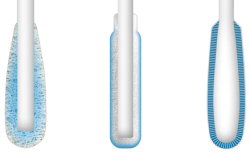
2. Has this swab been validated against the specific assays used in our laboratory?
Assay validation is collection-device-specific. The diagnostic kits your laboratory uses were developed and validated against particular swab types under particular collection conditions. Substituting an unvalidated swab—even a technically superior one—introduces a variable that the assay developer never tested. Ask the supplier for a list of assays their swab has been validated against, and compare that list against your laboratory's active protocols.
3. What is your lot-to-lot consistency documentation?
A good initial sample batch doesn't guarantee consistent production quality. Swab tip density, fiber adhesion strength, and shaft composition can vary between manufacturing lots if quality controls aren't rigorous. Ask to see internal QC data across multiple production lots—ideally six months or more of records. Look for consistency in elution efficiency measurements and sterility test results.
4. What is your recall history, and how were complaints handled?
No manufacturer with significant production volume has a spotless recall history. What matters is not the absence of issues but how they were managed. Ask directly about any regulatory notices, field safety corrective actions, or significant complaint volumes in the past three years. A supplier who handles this question openly is more trustworthy than one who claims a perfect record.
5. What are the supply continuity provisions in the contract?
Before signing any long-term supply contract, understand what contractual protections exist for allocation shortfalls, lead time extensions, and force majeure events. Ask about safety stock programs, alternative sourcing arrangements, and notification timelines for any changes to manufacturing locations or processes. The answers reveal how the supplier thinks about their relationship with customers under pressure—which is when the relationship actually matters.